
Glendale Community College
Home MenuLorraine Hansberry
Observation by Dr. David Viar, Superintendent/President
(February 2016)
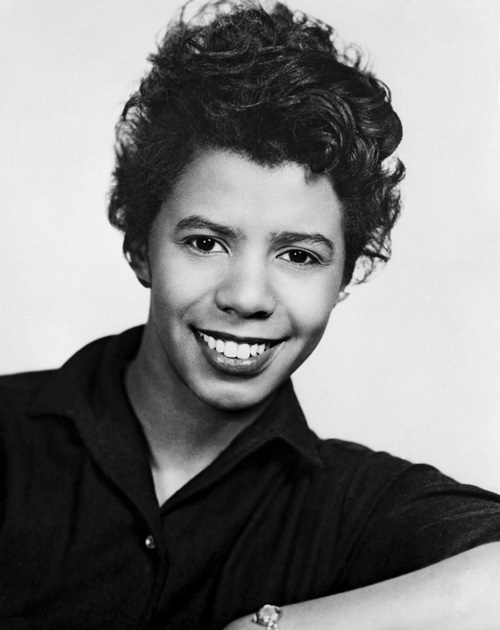 As a boy growing up in a Midwestern farm town of 4,000, whose residents were almost all white, I had much to learn about the world beyond. Lorraine Hansberry helped awaken me to the challenges faced by Black people in a country filled with prejudice and injustice.
Hansberry was raised in segregated Chicago. When her family moved to an all-white neighborhood, a brick was thrown through the window and there were constant threats of violence. She turned her experiences into “Raisin in the Sun,” the first play to appear on Broadway that was written by a Black woman. The title of her play comes from a poem by Black poet Langston Hughes, which opens with the questions, “What happens to a dream deferred? Does it dry up like a raisin in the sun?”
Through the play, Hansberry helped educate people like me as to what it meant to grow up in a Black family in America and about the traditions and values of her African heritage. She forced those of us reading or watching her play to reflect on racism and prejudice. She pushed me to go beyond my “known world.” Her play continues to this day to be produced on stage and on film -- its message still relevant. What happens when Blacks and others in America are denied access to dreams of education, career, housing, and more? Ultimately, do they “explode?” -- the closing question in Hughes’ poem.
I admire Hansberry and those who find ways to use whatever talents and skills they have to seek socially responsible change. While Ms. Hansberry used her family upbringing, education, and perceptive mind to write an award-winning play that challenged people to confront social justice issues, I believe each of us has special talents. Let us use those talents to better our world and to assure no dream is deferred.
(February 2016)
Hansberry was raised in segregated Chicago. When her family moved to an all-white neighborhood, a brick was thrown through the window and there were constant threats of violence. She turned her experiences into “Raisin in the Sun,” the first play to appear on Broadway that was written by a Black woman. The title of her play comes from a poem by Black poet Langston Hughes, which opens with the questions, “What happens to a dream deferred? Does it dry up like a raisin in the sun?”
Through the play, Hansberry helped educate people like me as to what it meant to grow up in a Black family in America and about the traditions and values of her African heritage. She forced those of us reading or watching her play to reflect on racism and prejudice. She pushed me to go beyond my “known world.” Her play continues to this day to be produced on stage and on film -- its message still relevant. What happens when Blacks and others in America are denied access to dreams of education, career, housing, and more? Ultimately, do they “explode?” -- the closing question in Hughes’ poem.
I admire Hansberry and those who find ways to use whatever talents and skills they have to seek socially responsible change. While Ms. Hansberry used her family upbringing, education, and perceptive mind to write an award-winning play that challenged people to confront social justice issues, I believe each of us has special talents. Let us use those talents to better our world and to assure no dream is deferred.