
Glendale Community College
Home MenuDr. Carter G. Woodson
Observation by Teyanna Williams, Assoc. Vice President Human Resources
(February 2016)
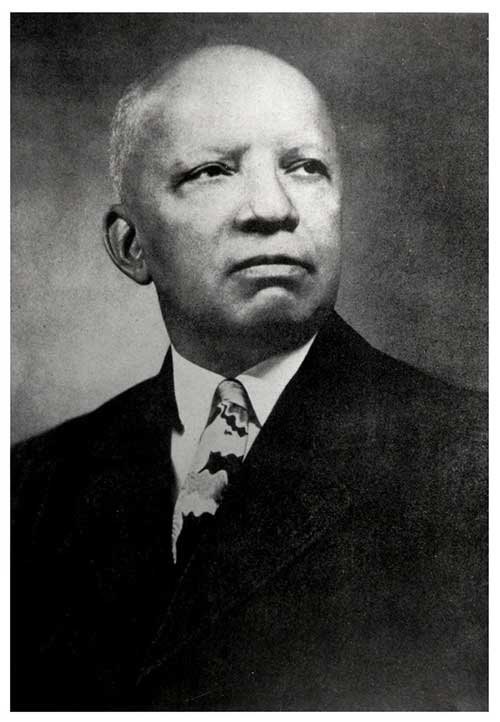 Black History Month is a time when our nation highlights the accomplishments, trials and tribulations of Blacks in America. It is a celebration of the generations of Black Americans who continue to achieve great things in America despite the impact of slavery, segregation and implicit bias on our journey.
Black History Month’s existence is itself a notable accomplishment. Celebrating Black History is the vision of Dr. Carter G. Woodson, founder of the Association for the Study of African American Life & History. Dr. Woodson pioneered the idea of celebrating of Black History, and in 1926 created “Black History Week”. The second week of February was chosen to coincide with the birthdays of Frederick Douglass and Abraham Lincoln—two great men who were integral parts of the fight to end slavery in America. The celebration was expanded to the full month of February in 1976.
Each year, the Association selects a theme for Black History Month. This year’s theme is “Hallowed Grounds: Sites of African American Memory”, to bring attention to the centennial celebration of the National Park Service and the more than twenty-five sites and the Underground Railroad Network to Freedom that are part of America’s hallowed grounds, including Dr. Woodson’s home in Washington D.C., a registered national landmark.
Dr. Woodson noted that Black-American contributions to America’s history "were overlooked, ignored, and even suppressed by the writers of history textbooks and the teachers who use them." Race prejudice, he concluded, "is merely the logical result of tradition, the inevitable outcome of thorough instruction to the effect that the Negro has never contributed anything to the progress of mankind.” As Dr. Woodson states in his book, The Mis-Education of the Negro, “the oppressor has always indoctrinated the weak with his interpretation of the crimes of the strong.” Woodson believed that education and increasing social and professional contacts among blacks and whites could help to reduce racism and prejudice. As we learn more and more about the effects of implicit bias and racism on our cognitive development, Dr. Woodson’s theories are more and more validated.
I see Black History Month as an important “micro-affirmation” of black culture. While it has been illegal in the U.S. to discriminate in jobs and housing on the basis of race since the passage of the Civil Rights Act of 1866, neither federal penalties or incentives for compliance were included in the law. This likely helped to contribute to an inconsistent enforcement of civil rights law and the rise of institutional racism, deep-seeded prejudice, and implicit bias. Black History Month helps to reverse the negative effects institutional racism, deep-seeded prejudice, and implicit bias caused by a lack of exposure to positive black history.
The fact that our Nation sets aside a time each year to focus on African-American history is Dr. Woodson's most visible legacy, and our Nation’s most visible attempt at reconciling the past intentional omission of the contributions of Blacks from American history. I share Dr. Woodson’s belief that education and demystifying the black community will help heal the racial divide that continues to exist in America. Dr. Woodson noted that “History shows that it does not matter who is in power... those who have not learned to do for themselves and have to depend solely on others never obtain any more rights or privileges in the end than they did in the beginning.”
Knowing your history—which includes knowing Black History—helps to guide our future.
(February 2016)
Black History Month’s existence is itself a notable accomplishment. Celebrating Black History is the vision of Dr. Carter G. Woodson, founder of the Association for the Study of African American Life & History. Dr. Woodson pioneered the idea of celebrating of Black History, and in 1926 created “Black History Week”. The second week of February was chosen to coincide with the birthdays of Frederick Douglass and Abraham Lincoln—two great men who were integral parts of the fight to end slavery in America. The celebration was expanded to the full month of February in 1976.
Each year, the Association selects a theme for Black History Month. This year’s theme is “Hallowed Grounds: Sites of African American Memory”, to bring attention to the centennial celebration of the National Park Service and the more than twenty-five sites and the Underground Railroad Network to Freedom that are part of America’s hallowed grounds, including Dr. Woodson’s home in Washington D.C., a registered national landmark.
Dr. Woodson noted that Black-American contributions to America’s history "were overlooked, ignored, and even suppressed by the writers of history textbooks and the teachers who use them." Race prejudice, he concluded, "is merely the logical result of tradition, the inevitable outcome of thorough instruction to the effect that the Negro has never contributed anything to the progress of mankind.” As Dr. Woodson states in his book, The Mis-Education of the Negro, “the oppressor has always indoctrinated the weak with his interpretation of the crimes of the strong.” Woodson believed that education and increasing social and professional contacts among blacks and whites could help to reduce racism and prejudice. As we learn more and more about the effects of implicit bias and racism on our cognitive development, Dr. Woodson’s theories are more and more validated.
I see Black History Month as an important “micro-affirmation” of black culture. While it has been illegal in the U.S. to discriminate in jobs and housing on the basis of race since the passage of the Civil Rights Act of 1866, neither federal penalties or incentives for compliance were included in the law. This likely helped to contribute to an inconsistent enforcement of civil rights law and the rise of institutional racism, deep-seeded prejudice, and implicit bias. Black History Month helps to reverse the negative effects institutional racism, deep-seeded prejudice, and implicit bias caused by a lack of exposure to positive black history.
The fact that our Nation sets aside a time each year to focus on African-American history is Dr. Woodson's most visible legacy, and our Nation’s most visible attempt at reconciling the past intentional omission of the contributions of Blacks from American history. I share Dr. Woodson’s belief that education and demystifying the black community will help heal the racial divide that continues to exist in America. Dr. Woodson noted that “History shows that it does not matter who is in power... those who have not learned to do for themselves and have to depend solely on others never obtain any more rights or privileges in the end than they did in the beginning.”
Knowing your history—which includes knowing Black History—helps to guide our future.